
How Cold Rolled Steel Strip Is Made: Four Core Stages
The transition from hot-rolled coil to precision cold rolled strip follows a tightly controlled sequence. Each stage exists to solve a specific metallurgical or dimensional problem introduced by the previous one.
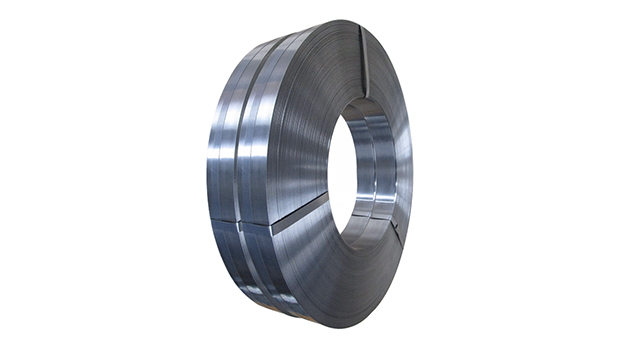
1. Pickling. Hot-rolled coil carries an oxide layer known as scale. Hydrochloric acid pickling chemically removes this scale, delivering a chemically clean surface for cold reduction. Without effective pickling, oxide particles would be pressed into the strip during rolling, creating surface defects that persist through downstream processing.
2. Cold reduction. The pickled coil passes through a cold reduction mill, where rollers apply massive compressive force at room temperature. Thickness is typically reduced by 30% to 90%, which elongates the metal grains and increases dislocation density within the crystal lattice. This strain hardening is what makes cold rolled strip stronger than its hot-rolled feedstock — strength can increase by up to 20% through this mechanism alone. At the same time, modern mills use X-ray gauge monitoring and automatic gauge control to hold thickness within tolerances far tighter than hot rolling can achieve.
3. Annealing. Cold reduction makes the steel hard and less ductile. Batch or continuous annealing restores formability by promoting recrystallization, softening the work-hardened structure while preserving the chemical composition. The choice between batch and continuous annealing, along with annealing temperature and time, determines the final balance of strength and elongation.
4. Temper rolling (skin passing). A final light reduction flattens the strip, controls surface roughness, and — critically — eliminates yield point elongation. Without temper rolling, stamped parts are vulnerable to Lüders lines and stretcher strains, surface defects that appear as irregular bands during forming. Temper rolling also sets the final surface texture, whether dull or bright, that downstream coating or painting requires.
Why this matters for buyers: a cold rolled steel strip supplier that controls all four stages in-house can hold gauge consistency, surface quality, and mechanical properties across the entire coil length — not just at the head and tail.
Cold Rolled Steel Strip Classification and Property Differences
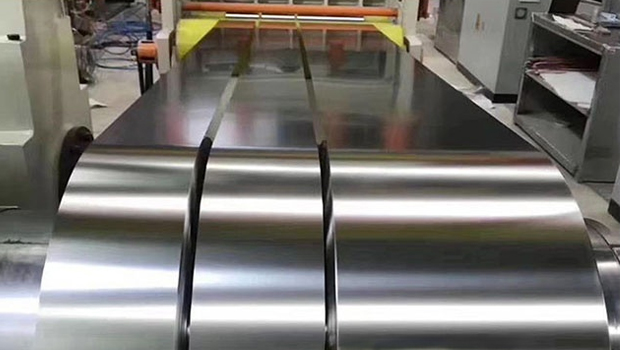
“Cold rolled steel strip” is not a single material. It is a process route applied to a range of steel grades, and the grade choice determines which properties the strip delivers in service.
|
The practical consequence is that two coils both sold as “cold rolled steel strip” can behave very differently on the same press line. A full-hard low-carbon strip and an annealed high-carbon spring strip share the same manufacturing route but diverge sharply in yield strength, elongation, and springback. Specification without grade and temper context is incomplete.
What Makes Cold Rolled Steel Strip Different: Performance Advantages
The performance gap between cold rolled and hot rolled strip is not marginal. It is structural, and it shows up in four areas that directly affect manufacturing economics.
Tighter dimensional tolerances. Cold rolling avoids the shrinkage and warpage that occur as hot-rolled steel cools from elevated temperatures. This allows thickness to be held to tolerances that hot rolling cannot match, enabling consistent feeding through high-speed presses and automated assembly equipment. For precision strip, thickness tolerances can reach ±0.005 mm in thin gauges, with surface roughness controlled to Ra 0.1–0.2 μm in bright-annealed product.
Superior surface finish. Hot-rolled strip carries a rough, scaled surface. Cold rolled strip, after pickling, cold reduction, and temper rolling, delivers a smooth, clean surface suitable for painting, coating, or exposed-part applications without additional surface conditioning.
Higher strength from strain hardening. Cold reduction increases dislocation density, raising yield strength and hardness. This means a thinner cold rolled strip can often carry the same load as a thicker hot-rolled alternative, supporting lightweighting without sacrificing structural function.
Consistent, predictable behavior across the coil. Controlled annealing and temper rolling produce uniform mechanical properties along the strip length and width. For manufacturers running continuous processes, this consistency reduces setup adjustment, rejection rates, and variability between coils.
The trade-off is equally important to state: cold rolled strip generally costs more than hot-rolled because of the additional processing steps and tighter quality control. It is the correct choice when tolerance, surface, or strength consistency affects yield — not when the application can tolerate hot-rolled variability.
High-Strength Steel Strip Applications: Where the Strength-to-Weight Balance Pays
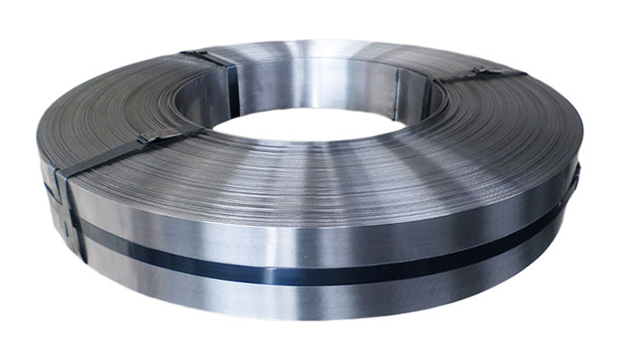
High-strength cold rolled steel strip is used where downgauging reduces weight without compromising load-bearing capacity. In automotive structures, advanced high-strength steels allow designers to save vehicle weight while maintaining crash safety performance. Specific applications include seat structures and adjustment mechanisms, door beams, bumper-related components, and chassis parts.
In commercial and specialty vehicles, high-strength strip appears in axle structures, wheel components, and crane booms — areas where higher yield strength translates directly into greater load capacity or reduced section thickness. Transmission discs, chair structural elements, and other formed components also rely on high-strength strip where complex formability and strength must coexist.
The application logic is consistent: high-strength strip is selected when the design requires either (a) a thinner gauge than a lower-strength grade could support, or (b) a higher safety margin within an existing package space. In both cases, the cold rolling route delivers the strength through strain hardening and thermal treatment, while the temper rolling step preserves enough formability for the part to be manufactured without cracking or excessive springback.
The Value of Precision Steel Strip in Manufacturing
Precision steel strip takes cold rolled strip to a tighter specification band and adds process discipline around edge quality, flatness, and surface consistency. Its manufacturing value is easiest to see through the tolerances it holds. Thyssenkrupp’s precision strip product information, for example, lists standard thickness tolerances of ±0.04 mm for strip in the 1.5–2.54 mm range, tightening to ±0.03 mm in special tolerance classes. Thinner precision strip for electronics and LED applications has been produced with thickness deviations of ±0.005 mm and surface roughness in the Ra 0.05–0.10 μm range.
These numbers matter because they propagate downstream. In connector and lead-frame production, miniaturization demands strip with uniform thickness and superior surface quality so that stamping dies and automated assembly equipment can run at rate without dimensional drift. In automotive electrical and safety-related components — retaining clips, sensor housings, connector over-springs — precision strip consistency supports reliable mating forces and contact resistance over service life. Battery contacts and electronic circuit components in electric vehicles similarly depend on high-quality metal strip where thickness variation directly affects current-carrying capacity and assembly fit.
For a manufacturer, the value of precision strip is not simply “better quality.” It is reduced die wear, fewer jam-ups on high-speed fed equipment, lower scrap rates from edge and camber variation, and fewer downstream adjustments when switching coils. Precision is a process-capability input, not a premium feature.
Sourcing Cold Rolled Steel Strip: What to Specify Beyond the Keyword
· Grade and chemistry (e.g., SPCC, SAE1008, S35C, HSLA designation)
· Temper / material condition (annealed, skin-passed, full hard, half hard)
· Thickness and width, with the applicable tolerance class and standard (e.g., ASTM A109/A109M covers cold rolled carbon steel strip with closer tolerances than sheet and a maximum carbon content of 0.25% for the standard grades)
· Surface finish (bright, dull, roughness Ra target)
· Edge condition (mill edge, cut edge, slit edge)
· Mechanical properties required (yield strength, tensile strength, elongation, hardness)
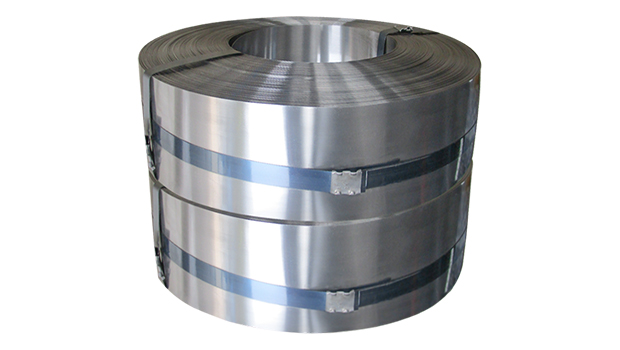
Supplies cold rolled and coated steel strip products with thickness ranges starting from 0.18 mm and width coverage suitable for downstream forming and coating operations. For buyers evaluating a cold rolled steel strip supplier, the productive first conversation is not about price per tonne in isolation, but about which tolerance class, temper, and surface condition the line actually requires — and whether the supplier’s process control can hold those limits coil after coil.
Frequently Asked Questions
Is cold rolled steel strip the same as cold rolled steel sheet? They share the same processing route, but “strip” typically refers to narrower, coil-fed product with tighter tolerances than sheet. ASTM A109/A109M specifies cold rolled carbon steel strip furnished to closer tolerances than cold rolled sheet.
Can cold rolled steel strip be welded? Yes, but weldability depends on grade and carbon content. Low-carbon grades weld readily; higher-carbon and some high-strength grades may require preheat, post-weld treatment, or specialized procedures. The cold-worked condition and temper also influence heat-affected-zone behavior.
Why does cold rolled strip cost more than hot rolled? The additional pickling, cold reduction, annealing, and temper rolling steps consume energy, roll wear, and quality-control effort. The premium buys tighter tolerances, better surface, and more consistent mechanical properties — value that is recovered when those attributes reduce scrap and rework downstream.
What does “skin-passed” mean on a cold rolled strip datasheet? Skin passing (temper rolling) is a light final cold reduction that improves flatness, sets surface roughness, and eliminates yield point elongation so the strip does not form stretcher strains during stamping.
How tight can precision cold rolled strip tolerances be? Commercial precision strip routinely holds thickness tolerances in the ±0.03–0.05 mm range for common gauges, with thinner specialty product reaching ±0.005 mm and surface roughness controlled to sub-micron Ra levels. The achievable limit depends on gauge, width, grade, and the supplier’s mill equipment and process control.