
What Is High Carbon Steel Strip and How Is It Used?
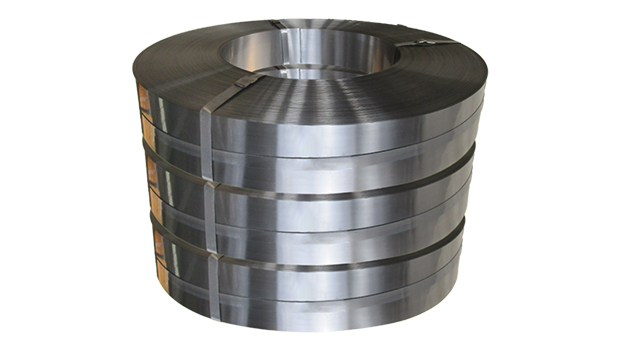
High Carbon Steel Strip is a cold-rolled flat steel product with a carbon content between 0.25% and 1.35% and a thickness typically no greater than 7.6 mm. Through combinations of annealing and rolling conditions, it achieves an engineerable balance among strength, hardness, elasticity, and formability, and is widely used in springs, cutting tools, automotive safety components, and precision machinery parts. The key to understanding this material is not memorizing a carbon-content number, but seeing how the interaction of “composition—cold rolling—heat treatment” determines what it can and cannot do.
Definition and Classification of High Carbon Steel Strip: Standards First, Then Condition
Starting from material standards is the most reliable way to understand High Carbon Steel Strip. ASTM A684/A684M explicitly defines cold-rolled high carbon steel strip as flat-rolled product with a thickness of 0.3000 in. (7.6 mm) or less and a width of 1/2 to 23 15/16 in. (12.5–600 mm), with a carbon content range of 0.25% to 1.35% inclusive. These numbers also draw the process boundary between “strip” and “sheet”: beyond 7.6 mm in thickness or 600 mm in width, the product technically falls into the category of cold-rolled sheet.
But more engineering-significant than dimensional classification is classification by supply condition. ASTM A684 divides high carbon steel strip into four conditions, each corresponding to a different cold-forming requirement and hardness window:
| Condition | English Name | Engineering Intent | Typical Applications |
|---|---|---|---|
| Spheroidize annealed | Spheroidized Annealed | Maximize cold-forming capability; lowest hardness | Parts requiring deep drawing or complex deformation |
| Soft annealed | Soft Annealed | Moderate cold-forming capability | General stamping and bend forming |
| Intermediate hardness | Intermediate Hardness | Light forming plus a certain stiffness/elasticity | Formed parts requiring a “stiff” feel |
| Full hard | Full Hard | Direct load bearing without relying on subsequent forming | Flat parts, blade substrates, spring base materials |
The core logic of these four conditions is to “unlock” or “lock” the strengthening potential of carbon through heat treatment: spheroidizing annealing converts lamellar cementite into a spheroidal form so that high-carbon steel does not crack during cold working; the full-hard condition retains the work hardening introduced by cold rolling and directly delivers high strength. The first step in selecting High Carbon Steel Strip is not to ask “what is the carbon content,” but to first confirm whether the final part bears load before or after forming—this determines which condition you should start from.
Further subdividing by carbon content, grades with 0.65%–1.0% C (such as 1075 and 1095) are common in springs and cutting edges; ultra-high-carbon levels of 1.0%–1.4% C point more toward bearings, precision tools, and other applications pursuing extreme hardness. Each step up in carbon content narrows the workable window by one degree and raises the corresponding requirements for cold-rolling and annealing control.
Performance Differences Among Steel Strips: How Carbon Content Reshapes the Mechanical Property Map
The performance differences of High Carbon Steel Strip are essentially a redistribution of strength, hardness, and ductility by carbon content through the microstructure. Data comparison is the most direct:
-
Low-carbon end (about 0.10% C) : tensile strength of about 340 MPa, elongation >35%. Ferrite dominates deformation; the material is “obedient” and easy to form, but its load-bearing capacity is limited.
-
High-carbon end (about 0.80% C) : tensile strength >1,000 MPa, elongation <10%. Cementite lamellae in pearlite become the main strengthening body; hardness and wear resistance jump, but plastic reserve narrows significantly.
-
Summary statistics for high carbon steel strip: MatWeb’s summary of the high-carbon steel category shows tensile strength spanning from 161 MPa to 3,200 MPa, with an average of about 1,120 MPa; Rockwell hardness on the C scale ranges from 10–70 HRC, with an average of about 46 HRC. The breadth of the range precisely shows that “high carbon steel strip” is a performance family, not a single specification; specific performance depends heavily on grade, cold-rolling reduction, and final tempering condition.
A more detailed microstructural explanation is that the strength and hardness of high-carbon steel depend mainly on pearlite lamellar spacing and the size and distribution of cementite; the finer the lamellar spacing, the higher the hardness and the better the fatigue life. All efforts in cold rolling and annealing are directed at controlling this microstructural geometry. Therefore, two High Carbon Steel Strips with the same nominal carbon content may show clearly different fatigue behavior and actual service life if their pearlite lamellar spacing or degree of cementite spheroidization differs.
Characteristics of Cold-Rolled High Carbon Steel Strip: Triple Control of Precision, Surface, and Microstructure
Cold rolling has become the mainstream supply form of High Carbon Steel Strip because it simultaneously exerts control in three dimensions, and these controls translate directly into certainty for downstream manufacturing.
First, dimensional precision. Precision cold rolling can control thickness tolerance at the ±0.0004 in. (about ±0.01 mm) level, and width can be slit as required from 2–500 mm. For high-speed stamping, multi-station progressive dies, or automated winding processes, thickness variation maps directly to die-clearance mismatch and reduced product consistency; cold-rolled tolerance therefore becomes a quantifiable yield lever.
Second, surface quality and shape. Cold rolling combined with bright annealing can avoid decarburization and provide a clean surface; roughness can be adjusted by application to different levels such as Ra ≤ 0.05 μm (BA grade) to Ra ≤ 0.16 μm (2B grade). Surface roughness affects more than appearance: in cutting tools and springs, surface defects are preferential initiation sites for fatigue cracks, and lower Ra means more predictable fatigue life.
Third, microstructure adjustability. Cold-rolled high carbon steel strip can be supplied in spheroidized annealed, intermediate hardness, or full-hard condition, decoupling the “softness/hardness” of the same grade into an independent quality parameter. The full-hard condition can have pearlitic, spheroidized, or mixed structures, with the lower hardness limit agreed between supplier and buyer. This means that when purchasing High Carbon Steel Strip, carbon content only answers “potential,” while condition answers “reality”—both must be locked in together to predict part performance.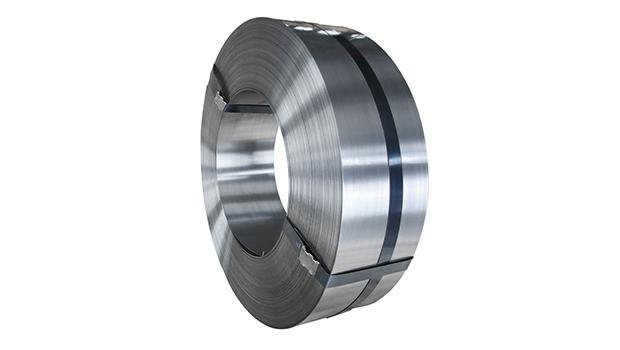
Applications of High-Strength Steel Strip: Selecting by Failure Mode, from Energy Storage to Cutting
The high strength of high carbon steel strip is not an end in itself, but a means of resisting specific failure modes. Organizing by the failure logic of application scenarios is more helpful for selection decisions than listing industries.
Elastic energy storage and fatigue resistance: springs and suspension systems. Automotive suspension, clutch springs, valve springs, and similar components require the material to store and release elastic strain energy under cyclic loading without plastic relaxation. The high yield strength and fatigue resistance obtained by high carbon steel strip after quenching and tempering are designed precisely for this need. Grades such as SAE 1075 and 1095 appear repeatedly in such applications, and precision springs have the most demanding requirements for thickness tolerance and surface quality.
Abrasive wear resistance and edge retention: cutting tools and saw blades. Saw blades, band-saw edges, surgical blades, and hand-tool edges face failure modes of abrasive wear and plastic deformation of the edge. High carbon steel strip with carbon content near the eutectoid or hypereutectoid range, after quenching and low-temperature tempering, achieves high hardness and wear resistance, enabling the edge to maintain geometric sharpness during repeated cutting. In this scenario, edge rolling caused by insufficient hardness and edge chipping caused by excessive hardness form a contradiction; the precise choice of tempering temperature is more decisive than carbon content itself.
Shape stiffness and dimensional stability: shims, clutch plates, seat rails. Not all high carbon steel strip applications involve dynamic fatigue or cutting. Parts such as shims, friction-plate backings, and seat tracks need to maintain shape without collapsing under static or quasi-static loads. The stiffness provided by the full-hard condition allows such parts to serve without additional heat treatment, while cold-rolled tolerances ensure assembly interchangeability. These applications are often overlooked, but they precisely show that the value of High Carbon Steel Strip lies not only in being “strong,” but also in directly delivering “stiffness” in strip form.
The Value of Precision Steel Strip to Manufacturing: Removing Uncertainty from the Production Line
The most underappreciated value of precision high carbon steel strip is not any single index itself, but its contribution to the predictability of the manufacturing system. When the thickness, hardness, shape, and surface quality of steel strip are controlled within narrow windows, variables in downstream processes are eliminated one by one, and only then do yield and cycle time become manageable.
Take stamping and fine blanking as an example: when thickness tolerance is narrowed from ±0.05 mm to ±0.01 mm, the die clearance no longer needs extra margin for the “worst case,” the edge wear rate decreases, and burr-height consistency improves. For high-speed progressive dies, this certainty translates directly into fewer shutdowns for die adjustment and higher material utilization. In precision winding and forming scenarios, the uniformity of shape and residual stress determines whether part springback is predictable; predictable springback is the precondition for die-compensation algorithms to work.
From a supply-chain perspective, precision steel strip moves part of quality control upstream to the steel mill. The buyer pays a higher material unit price in exchange for a lower incoming-inspection burden, more stable die life, fewer batch-to-batch adjustments, and a more commit-ready delivery cadence. For high-volume, high-cycle-time, low-tolerance manufacturing scenarios—automotive safety parts, precision springs, electronic connector stamping—this trade is almost inevitable. The true “precision” of precision steel strip ultimately shows up in reduced line downtime and scrap rates.
FAQ About High Carbon Steel Strip
What is the carbon content range of High Carbon Steel Strip?
According to ASTM A684, the carbon content range of high carbon steel strip is 0.25% to 1.35% inclusive, but in engineering practice, high carbon spring and cutting-tool strip commonly falls in the 0.65%–1.4% range. Carbon content below 0.25% is generally classified as low-carbon or mild steel strip.
Can high carbon steel strip be welded?
Yes, but welding has the narrowest process window among all fabrication methods for high carbon steel strip. The higher the carbon content, the greater the risk of heat-affected-zone hardening and cold cracking. Feasible routes include preheating, using low-hydrogen filler materials, and immediate post-weld stress relief or tempering; for load-bearing welds, local or full post-weld heat treatment is usually required to restore toughness. In spring and cutting-tool applications, a more common practice is to avoid welding as the primary load-bearing connection and instead use mechanical fastening or formed interlocks.
How should I choose between “annealed” and “full hard” high carbon steel strip?
It depends on whether the part bears its main load before or after forming. Annealed condition (spheroidized annealed or soft annealed) serves cold forming: the material is softer and allows stamping, bending, and deep drawing into complex shapes, after which quenching and tempering impart final strength. Full hard directly delivers the strength from cold-rolling work hardening and is suitable for flat parts, blade substrates, or elastic elements that do not require deep forming. If the part shape is simple and static stiffness is the main requirement, full hard can eliminate the heat-treatment step; if geometric complexity is high, annealed condition is almost always the starting point.
Why does high carbon steel strip emphasize “cold rolling” rather than “hot rolling”?
Hot rolling reduces the billet to a workable thickness, but surface scale, thickness variation, and microstructural uniformity are insufficient for the direct requirements of precision parts. Cold rolling further reduces thickness at room temperature while imparting ±0.01 mm-level thickness tolerance, controllable surface roughness, and uniform microstructure, and can adjust cementite morphology through annealing–cold-rolling routes. For high carbon steel strip, cold rolling is the key process that translates “chemical composition” into “engineering performance.”
Are high carbon steel strip and spring steel strip the same thing?
Not completely equivalent, but highly overlapping. Spring steel strip is an application-oriented subset of high carbon steel strip: most spring steel strip belongs to high-carbon or medium-high-carbon alloy steel, but high carbon steel strip also covers non-spring uses such as cutting tools, shims, and wear-resistant structural parts. Conversely, some spring steels fall outside the category of ordinary high carbon steel through additions of alloying elements such as Cr and V. Selection should be based on the service failure mode, not on the name label.